

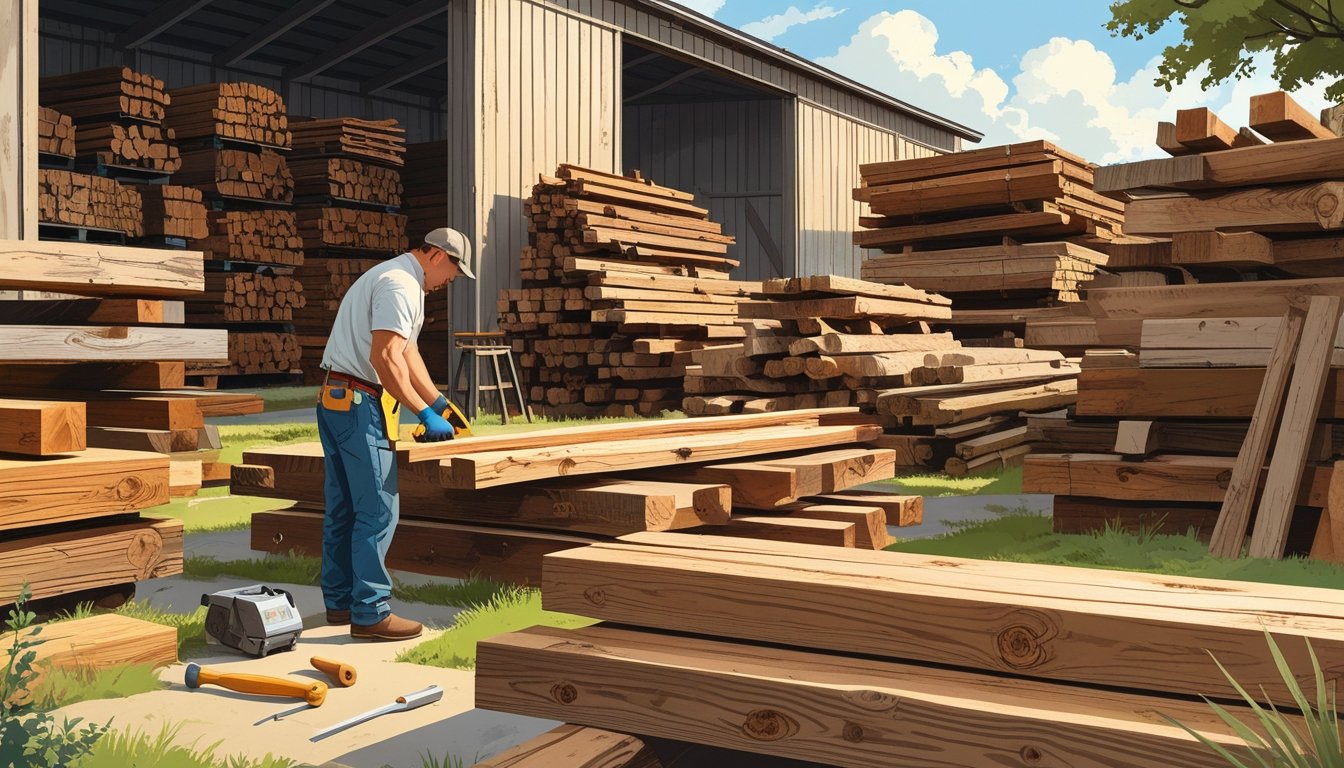
Reclaimed wood beams bring depth, strength, and history to modern construction. These timbers carry the craftsmanship and character of their origins—each one unique, shaped by decades of use and exposure.
At Bourgeois Materials, every reclaimed beam is sourced for integrity, ensuring builders and homeowners get authentic, kiln-dried timber ready for design or structure. Each beam tells a story of sustainable craft, offering both visual warmth and long-term performance.
This guide explains how to identify high-quality reclaimed beams, where to find them, and how to prep them for use. You’ll learn sourcing tips, inspection methods, and creative ways to feature reclaimed beams in your next project.
Learn what counts as reclaimed beams, the common beam types you’ll find, and the main benefits that make them worth the effort. This helps you choose the right pieces for structure, finish, and budget.
Reclaimed wood is lumber salvaged from a previous use. Typical sources include old barns, warehouses, factories, and deconstructed homes. Confirm the wood’s origin, as pieces from railroad ties or chemically treated structures can be unsafe.
Look for signs of previous use: nail holes, peg mortises, patina, and tool marks. These features affect appearance and may need prep work. Ask sellers about kiln-drying, pest treatment, and whether the beam was reclaimed intact or resawn.
Check species and growth age. Old-growth wood—common in antique beams and barn wood—tends to be denser and more stable than modern fast-growth lumber. Knowing species helps you match beams to load needs and finishing plans.
Beams come in several common forms:
Inspect each type for cracks, rot, and hidden metal. Heavy beams from barns or factories often contain embedded nails or spikes. Use a magnet and visual checks before milling or installation.
Reclaimed beams offer practical advantages. Old-growth reclaimed wood is often denser and more stable, so it resists warping and holds fasteners better than new softwood. That makes it useful for load-bearing and visible features.
You’ll also gain a distinctive appearance. Nail holes, checking, and weathered grain give a unique look you can’t get from new lumber. This adds character to mantels, exposed rafters, and furniture.
Sourcing reclaimed wood can save money if you salvage locally, and it reduces demand for new timber. Choosing reclaimed beams supports reuse and can help meet sustainability goals in your project.
ArchDaily reports that reusing materials like reclaimed wood beams can cut a project’s embodied carbon by up to 50%. These beams preserve the energy once used to harvest, dry, and transport timber, preventing new emissions.
This closed-loop use supports the global shift toward circular design and carbon-neutral construction—an essential step in sustainable building practices.
You can find reclaimed beams at local salvage yards, online marketplaces, specialty suppliers, and active demolition or renovation sites. Each source has different costs, conditions, and steps to inspect and transport the wood.
Salvage yards and architectural salvage stores often stock antique timber, barn wood, and solid reclaimed beams ready to reuse. Visit yards in person so you can inspect grain, check for rot, and test for hidden nails or metal.
Ask staff about the wood’s origin and whether beams have been kiln-dried or treated for pests.
Bring a magnet, tape measure, and camera. Measure beam dimensions and note species when possible. Negotiate price by pointing out defects like cracks or excessive warp. Many yards will offer cutting, milling, or delivery for a fee.
Online marketplaces like Facebook Marketplace, Craigslist, and specialty classifieds list reclaimed lumber and reclaimed wood beams from local sellers. Search keywords such as “antique timber,” “barn wood beams,” or “reclaimed beams,” and filter by location to save on hauling costs.
Ask sellers for clear photos, beam lengths, thickness, and whether the wood is solid or hollow. Confirm if beams are from old barns, houses, or industrial structures. Always request a pickup option and inspect beams before paying. Watch for listings of pallet or crate wood—those are often lower grade and may need extra prep.
Specialty reclaimed beam suppliers and vintage timber companies handle larger inventories of hand-hewn beams, reclaimed hardwood beams, and kiln-dried stock. These suppliers often list board feet, species, and provenance, and they can ship nationwide or offer local delivery.
Expect higher prices for graded, cleaned, and kiln-dried beams, but also more consistent quality and warranty options. Ask about milling services, moisture content reports, and whether beams were heat-treated or chemically treated. Suppliers may also offer matching sets for visible projects like mantels or exposed ceiling beams.
Demolition and renovation projects yield valuable reclaimed wood beams, often from old barns, warehouses, and historic homes. Contact local contractors, deconstruction companies, or building owners to ask about salvage rights or labor-for-wood arrangements.
Get written permission before removing any material. Bring tools and safety gear if you plan to salvage yourself. Inspect beams on site for insect damage, embedded metal, and overall structural soundness. If you can’t move beams immediately, ask the owner to hold them until you arrange transport.
Choose beams that match your project's load needs, aesthetic, and installation method. Focus on species, surface style, and the beam’s current condition to avoid surprises during construction.
Pick beams that are sound and safe to use. Check for rot by pressing with a screwdriver; solid wood beams should be hard with no soft spots. Look for insect damage—small holes and frass are warning signs.
Use a magnet or metal detector to find hidden nails, spikes, or bolts before cutting or planing. Remove any metal to protect your tools.
Ask sellers about previous use and whether beams were heat-treated or kiln-dried. Old-growth reclaimed oak and antique timber often have dense, stable grain that holds up well. If the beam will carry loads, get a structural assessment or grade stamp; hand-hewn beams or circle-sawn beams may need reinforcement or sistering, depending on condition.
Measure moisture content with a meter; aim for 8–12% for interior use. Check for large splits or checks that could weaken the beam where you plan to cut or bolt. Prioritize boards with consistent thickness and minimal twisting.
Surface style affects both look and prep work. Hand-hewn beams show axe marks and irregular faces that add rustic character. They often need less distressing but more milling if you need flat surfaces. Circle-sawn beams have narrow, parallel saw marks and a cleaner, vintage industrial look.
Rough-sawn beams keep saw texture and can accept finishes without much sanding. Sawn beams and solid wood beams offer predictable thickness and are easier to join. Box beams are hollow, decorative members you can use to hide modern support, but verify they’re structurally tied to real timber if load-bearing.
Antique timber may carry old patina and nail holes that you can leave for charm or fill for a cleaner finish. Decide if you want to preservethe original surface, like patina, or fully plane the beam to reveal fresh grain. Each finish choice affects labor and cost.
Species determines strength and appearance. Reclaimed oak is popular for its hardness, tight grain, and long service life. Pine and fir from old barns are lighter and often more affordable, but may need reinforcement when used as primary supports.
Vintage timbers can include mixed species—always confirm what you buy. Sizing options range from full-dimension solid wood beams to slimmer sawn beams and decorative box beams.
Solid reclaimed beams give you authentic mass and thermal properties, but weigh more and require heavy lifting. Sawn beams and rough-sawn beams come in standard widths and depths, which simplifies installation.
Ask sellers for exact dimensions and whether beams were trimmed to square. If you need a specific span rating, provide your plans so they can recommend beam depth, species, and whether sistering or steel inserts are needed.
Remove old hardware, kill pests, and stabilize moisture before you cut or finish solid beams. Do each step carefully so your reclaimed wood beams stay strong and safe for framing or visible features.
Work outside or in a well-ventilated shop to avoid spreading dust and debris. Use a stiff wire brush and scraper to remove loose dirt, paint flakes, and surface rust. For deep grime, rinse with a hose and let the wood dry fully—place boards on stickers so air moves all around the beam.
Find and remove nails, screws, and metal with a magnet and an inspection light. Pull exposed fasteners with pliers or a pry bar. For embedded nails, use a reciprocating saw with a metal-cutting blade or grind the heads off, then pull the shank from the other side. Always wear gloves and eye protection when de-nailing reclaimed wood.
Check for hidden metal with a metal detector before milling. Mark any remaining hardware, so you or your mill operator avoids damaging blades. Removing nails and metal protects your tools and ensures solid wood beams are safe to plane, joint, and cut.
Measure moisture content with a moisture meter. Solid beams should read around 8–12% for interior use; higher numbers mean more risk of warping. If beams are above the target range, kiln-dry them or stack and sticker them indoors in a dry, heated space until they reach a stable reading.
Treat for insects and fungi if you see bore holes, frass, or soft wood. Borate solutions penetrate wood and control wood-boring insects and fungi without leaving heavy residues. For severe infestations, fumigation or professional heat treatment is safer—contact a local specialist who handles reclaimed timber.
Label each beam with species and final moisture reading after treatment. That record helps you match beams to the project and avoid mixing unstable pieces with kiln-dried solid wood beams.
Mill only after the moisture content is stable. Flatten one face and edge so you can safely and accurately dimension the beam. Use a bandsaw or circular saw to remove rotten or badly damaged sections before milling.
When you mill reclaimed beams, expect nail holes, checks, and historic saw marks. Decide whether to keep those features for character or fill them with epoxy or wood plugs for a cleaner look. Always rout or sand edges to remove splinters and to prepare surfaces for finish.
Choose finishes that match the beam's use. For exposed interior solid beams, apply a penetrating oil or matte polyurethane to protect the wood while keeping texture. For structural reclaimed wood beams, follow local building codes and apply an appropriate protective coating after any required inspections or engineering checks.
Reclaimed beams add warmth, history, and structure to a space. Use them as visible accents, load-bearing elements, or crafted pieces that keep the wood’s original character.
Reclaimed beams make sturdy, eye-catching fireplace mantels. Choose an antique beam with a flat underside for easier mounting. Leave some nail holes or saw marks for character—sand only the face you’ll finish to preserve the aged look.
Mount the beam using heavy-duty wall anchors or bolt it into studs. For long mantels, add hidden steel brackets at 16–24 inch intervals to prevent sagging. Old-growth wood is dense and less prone to warping.
Match the beam finish to other trim by staining or using a clear oil. If the mantel sits close to open flames, seal the back face with a fire-resistant barrier.
Reuse reclaimed beams as true structural elements or as decorative pieces. Have a structural engineer check beams for rot, insect damage, and adequate size before using them for support. Old-growth beams often hold up well because of their dense grain.
For decorative exposed beams, bolt them to joists or attach faux-beam boxes around new lumber. Use beams across vaulted ceilings, as header accents, or as rustic room dividers. Treat beams with kiln-drying or borate if you worry about pests.
Leave metal nail plates or bolt holes visible for an industrial look. Anchor one end firmly and allow the other to float slightly to accommodate seasonal movement.
Reclaimed beams make solid tabletops, benches, and console tables. Cut a beam lengthwise to create planks, or join several short pieces with biscuits and epoxy for a wider top. Old-growth wood has tight grain that's great for sanding and finishing.
Reinforce tables with a steel frame or apron to prevent twisting. Use beam ends as sturdy bench legs or as posts for bed frames. When building cabinets, use beam-faced trim to tie furniture to exposed beams in the room.
Prep by de-nailing, milling visible faces, and filling large holes with epoxy or matching wood plugs. Finish with tung oil, low-VOC varnish, or wax to protect the surface and keep the vintage look.
Reclaimed wood beams let you blend sustainability with timeless craftsmanship. Each salvaged timber adds strength and heritage to new construction, reflecting the care and resourcefulness of traditional building methods.
At Bourgeois Materials, reclaimed beams are inspected, dried, and prepared to meet today’s design and structural demands. Builders, designers, and homeowners rely on these materials to create lasting projects with real environmental and aesthetic value.
Ready to bring reclaimed timber into your next design? Reach out for expert sourcing guidance and start building with materials that truly last.
Find practical tips on sourcing, evaluating, pricing, prepping, and using reclaimed beams.
Check architectural salvage yards and lumber reclaimers for beams from barns, factories, and old buildings. Contact local demolition and remodeling contractors to ask about salvageable beams. Watch online classifieds and neighborhood apps using search terms like “barn beams” or “reclaimed beams.” Visit farms with old outbuildings and ask about dismantling structures—farmers may trade beams for labor or a small fee.
Look for solid wood with tight joints and no deep rot. Tap the beam for a clear, solid sound. Scan for hidden metal with a magnet or detector and remove all hardware. Check moisture content—8–12% is ideal for interiors. Inspect for insect holes, staining, or fungal growth. Identify the species if possible; old-growth hardwoods are usually denser and more stable.
Consider the purchase price, transport, and labor to remove and clean beams. Large beams may require a truck or extra help to move. Add costs for milling, de-nailing, and possible pest treatment. Unique character or rare species can increase the price but may add design value.
Watch for demolition permits and renovation posts; owners may give away beams to avoid disposal fees. Offer to haul beams away quickly. Trade labor for beams on salvage projects. Look for free listings for pallets, crates, or old fence posts and upcycle them into beams. Use only heat-treated pallets for indoor projects.
Clean the beam with a stiff brush. Remove all metal fasteners. Mill the beam to true dimensions with a planer or jointer if needed. If you can’t mill, attach new timber to the beam for structure. Treat for pests or mold with kiln-drying or borate solution. Sand and finish with low-VOC products for indoor use.
Check local building codes for structural use of reclaimed timber. Some codes require engineered calculations or inspections before you use beams to carry loads.
Avoid wood from railroad ties, treated utility poles, or sources that used toxic preservatives. These materials may contain creosote or heavy metals and can be unsafe indoors.
Follow local preservative and pest-control rules when importing wood across state lines. Untreated or infested wood may require quarantine or inspection.
