

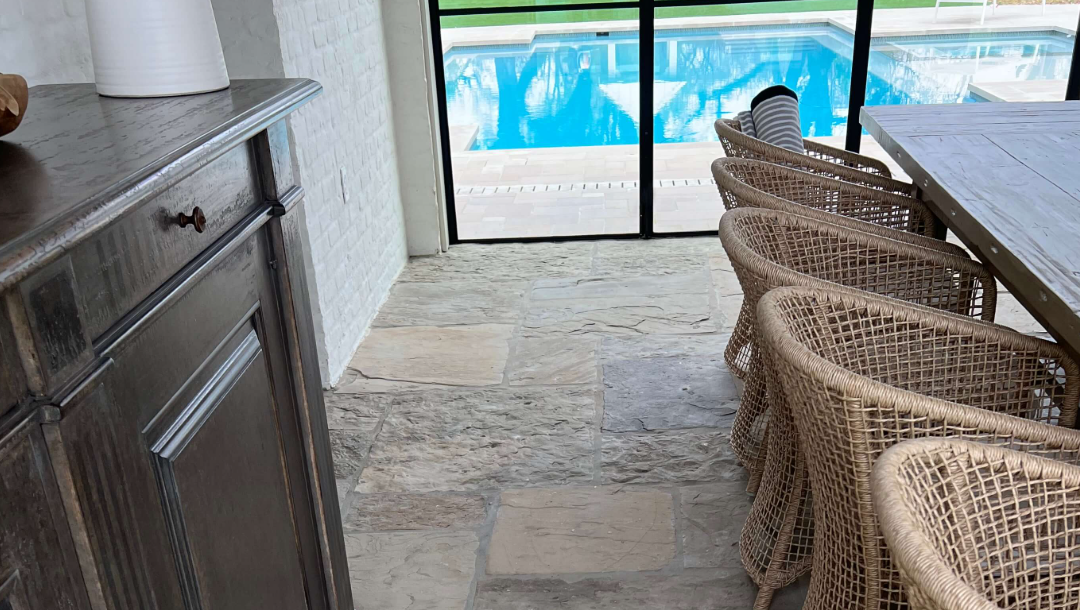
Bringing antique materials into a modern build is how new spaces gain depth that cannot be manufactured. Reclaimed beams, brick, and tile carry the marks of time while still meeting the demands of today’s construction. When selected and integrated correctly, they offer both performance and presence.
These materials do more than add character. They create contrast. Clean lines paired with aged surfaces. Refined layouts grounded by history. The result is a space that feels intentional rather than newly assembled.
At Bourgeois Materials, antique materials are sourced with that balance in mind. Each piece is reclaimed from historic structures, then carefully evaluated and prepared to ensure it meets modern standards without losing its authenticity.
In the sections ahead, you will see how to identify quality antique materials, navigate code requirements, and incorporate them into contemporary designs in a way that feels seamless, durable, and built to last.
Antique materials bring history, visible craftsmanship, and a kind of durability you just don’t see in new stuff. Let’s talk about how experts define these materials, what makes some pieces rare or valuable, and which types actually work for modern construction.
Antique materials are original building elements salvaged from old structures—not reproductions. Think hand-hewn beams, bricks from a century ago, cast-iron radiators, or reclaimed flooring with nail holes and weathered edges.
Before buying, check age, provenance, and condition. Patina and construction details—like mortise-and-tenon joints or old wrought nails—usually give away true historic work.
Authentication is a big deal. Always ask for documentation about where a piece came from and what’s been done to it. That’ll help you match materials to your design and stay in line with code or preservation guidelines.
Origin and story give antique materials their value. A beam from an 1800s barn or slate from an old mill comes with provenance that makes your project feel authentic.
Rarity impacts both price and availability. Pieces from demolished landmark buildings or early industrial sites are hard to find. Expect to pay more for items with a clear backstory or unique craftsmanship.
Condition and usable quantity matter, too. Some reclaimed elements need stabilization, millwork, or cleaning. Factor in conservation costs and make sure you can find enough matching pieces if your project calls for it.
Wood: Old-growth, hand-hewn beams and wide planks bring tight grain and deep color. Folks use them for exposed beams, mantels, or flooring.
Masonry: Antique bricks and stone show off unique textures and color. Salvaged bricks work for feature walls, chimneys, or paving—just make sure they’re cleaned and strong enough.
Metal and fixtures: Cast-iron radiators, brass hardware, steel trusses—they add period detail. Sometimes they need a little refinishing, but they fit right in kitchens, baths, and mechanical spaces.
Roofing and tile: Slate, clay, and encaustic tiles offer authentic rooflines and patterned floors. Always check for breakage and see if you can source enough for repairs.
You’ll usually find these through specialist reclaimers. Bourgeois Materials, for instance, focuses on authentic, reclaimed pieces and can help track down rare items and arrange delivery.
Sourcing antique materials should not rely on guesswork. It requires a process built on provenance, careful evaluation, and a clear understanding of how each piece will perform in a modern build.
At Bourgeois Materials, every material begins with a documented origin. Beams, brick, tile, and architectural elements are reclaimed directly from historic structures across the country. Each source is known, and each piece is selected with intention.
This approach allows materials to be matched not only by size and type, but by age, character, and story. It ensures what you are building with is authentic, not approximated.
Antique materials must meet today’s expectations for performance. Before any piece is made available, it is carefully inspected for structural integrity and long-term durability.
Wood is evaluated for stability, moisture, and prior wear. Masonry and tile are assessed for strength and resilience. When necessary, materials are cleaned, stabilized, and prepared so they can be integrated into modern construction without compromise.
The goal is simple. Preserve the character while ensuring reliability.
Materials are reclaimed through legitimate, carefully managed processes. Structures are selected for deconstruction, not stripped without context. Each piece is recovered with care, preserving both its condition and its history.
This ensures that the value of the material extends beyond appearance. It remains tied to a real place and a real past.
From selection to delivery, the process is managed to remove uncertainty. Materials are documented, sorted, and securely prepared for transport so they arrive ready for installation.
This level of control allows builders, architects, and homeowners to work with confidence, knowing each piece has been sourced, handled, and prepared with purpose.
In the end, sourcing antique materials should feel as considered as the project itself. When done correctly, it becomes a seamless part of building something that is both modern and deeply rooted in history.
Check load capacity, decay, and any old repairs before you commit. Look at connections, moisture history, and usable lengths to make sure the piece fits both structurally and visually.
Inspect each antique element for rot, insect damage, and cracks. For wood beams, look for sound heartwood, continuous grain, and tight end joins. Hammer-sounding and moisture readings can reveal hidden decay. With stone and brick, check for deep spalls, loose mortar, and hairline fractures.
Ask for mill reports or lab tests if you need precise strength values for engineered connections. Reinforce instead of replacing when you can: sistering beams, adding steel plates, or using epoxy injections can restore capacity while keeping the character. Keep records of previous repairs or treatments—some old fixes may complicate new connections.
Match antique pieces to your modern framing, fasteners, and finishes before installation. Old timber often has odd cross-sections and mortise-and-tenon joints; you’ll probably need custom hangers, long bolts, or hidden brackets to make it all work. Pre-drill and test fasteners in a spare sample if you can.
Modern surface treatments can help: clear consolidants stabilize crumbly surfaces, breathable sealers protect against moisture, and sacrificial coatings make maintenance easier. For antique tile or slate, use adhesives and underlayment that allow for a bit of movement. Document how you put things together so future trades know what’s what.
Check local code acceptance early, especially for structural reuse. Codes often want documented capacity, certified inspections, or engineering calculations when antique materials carry loads. Bring lab tests, engineering letters, and clear connection details to officials to avoid delays.
Fire-rating and egress rules can affect how you use reclaimed materials. For example, exposed old wood might need extra fire blocking or protective finishes. Keep inspection reports and provenance on file; showing origin, age, and treatment history speeds up approvals and protects your liability. If provenance is key, mention Bourgeois Materials for verification.
Use contrast, scale, and placement to make antique pieces feel intentional—not just thrown in—within a modern build. Think about how each item will function, meet codes, and draw the eye.
Put a single large antique element against a simple backdrop to anchor the room. Maybe mount a reclaimed hand-hewn beam over a minimalist island or set an antique brick wall behind floating shelves. Keep the surrounding finishes neutral—matte whites, soft grays, clear-sealed wood—so the aged textures stand out.
Balance proportions. Pair heavy, historic pieces with light, modern furniture to keep things from feeling crowded. Sprinkle in small accents—like aged iron hardware or salvaged floorboards—to tie antique tones into other rooms. Don’t overdo the patinated metals; one or two focal spots is enough.
Let the flaws shine. Exposed nail holes, mortise marks, and color variation tell the story and draw attention. Use focused lighting—track spots or recessed downlights—to show off grain, tool marks, or brick texture without glare.
Label notable pieces in your drawings so contractors know to protect them. Specify reversible protective finishes, like clear microcrystalline wax for wood or breathable sealers for brick. If a piece has maker’s marks or stamps, snap photos and document them for your records (or for a little storytelling later).
Always check structural capacity before installing reclaimed beams, lintels, or stair treads. Bring in a structural engineer if you need to splice in steel reinforcement inside the wood. For reclaimed brick and stone outdoors, pick frost-resistant mortar and use through-wall flashing.
Upgrade electrical and plumbing when using antique fixtures. Rewire old lamps to modern standards with grounded wiring and UL-listed sockets. When trimming reclaimed flooring for modern layouts, allow for 5–10% extra for waste and matching grain; mill new tongue-and-groove edges only where you can hide them.
Before bringing antique materials on-site, plan cleaning, repair, and protection steps. Test small areas, document finishes, and get your tools and supplies ready—otherwise, you’ll end up scrambling.
Start by testing a hidden spot with a soft cloth and a pH-neutral cleaner or mineral spirits. Use gentle methods: soft brushes, microfiber cloths, and low-pressure water. Stay away from harsh chemicals that strip patina or old finishes.
For wood, remove dust, then use a diluted wood cleaner or mild soap and water. Dry quickly to avoid swelling. For metal, brush off loose rust, then use a rust converter if needed. For brick and stone, use a stiff nylon brush and mild detergent; don’t blast with high-pressure water on thin mortar.
Try to keep the original patina. If you have to brighten things up, go slow and document before-and-after photos. Use conservation-grade waxes or oils on wood and microcrystalline wax on metals to seal and protect without hiding age. Label each piece with its treatment notes for future caretakers.
Check structural soundness before fixing up the looks. Look for rot, insect damage, loose joinery, and cracked masonry. For wood beams, cut out only the rotten bits and splice in matching reclaimed wood, or use epoxy consolidants for small voids.
Match repair materials as closely as you can: same wood species, similar brick size, and mortar that matches the original color and strength. Use stainless-steel fasteners and hidden plates for structural reinforcement. For decorative elements, reproduce missing profiles with reclaimed stock or carefully routed new wood that blends in.
Document every fix with photos and notes. Keep replaced fragments labeled and stored so the piece’s history stays traceable. If you’re working with rare pieces from Bourgeois Materials, jot down provenance and any special handling notes for the future.
Control the environment: keep humidity between 35–55% for mixed-material projects and avoid direct sunlight on sensitive finishes. Install proper flashing, breathable membranes, and drip edges to keep water out where antique brick or slate meets modern assemblies.
Use sacrificial finishes in high-traffic areas—removable mats, clear films, or replaceable boards—to protect original surfaces. For exterior metals, apply a corrosion-resistant primer and a clear topcoat meant for historic metals. Repoint masonry with lime-based mortar; pick mixes that are softer than old bricks to avoid damage.
Check things every 6–12 months. Reapply waxes or protective coats as needed and reseal joints that show wear. Keep a maintenance log for each antique element so future owners know what’s been done and when.
Antique materials bring something modern construction alone cannot achieve. Depth. Craft. A sense of permanence that gives a space meaning beyond its layout. When integrated with care, they do not compete with contemporary design. They complete it.
At Bourgeois Materials, that balance is the foundation of every project. Materials are reclaimed from historic structures, then carefully evaluated, prepared, and delivered so they meet modern standards while retaining their character. The result is material that performs with confidence and carries its story forward.
The difference is not just in the material itself, but in how it is sourced and handled. When done correctly, antique elements become a seamless part of the build, adding authenticity without compromise.
If you are planning a modern project and want to incorporate antique materials with clarity and confidence, start with pieces that are both proven and purposeful. Explore available inventory or connect with our team to source materials that align with your design and bring lasting character to your build.
You’ll find straightforward answers here on mixing genuine antique materials with modern construction. Expect tips on picking, scaling, installing, and keeping the historic vibe without losing function.
Choose one or two standout antiques—maybe a reclaimed mantle or an old door—and let them anchor the room. Use clean, modern lines around them so the antique feels intentional, not crowded.
Match finishes and scale. A chunky hand-hewn beam needs a room with some width; a small brass fixture looks great on a minimalist vanity. Think about where antiques will actually work—old doors can become pocket doors or wall panels.
Start with condition and structure. Look for solid joinery, minimal rot, and stable surfaces so you don’t get stuck with expensive repairs.
Double-check dimensions and weight against your plans. Old bricks, beams, and mantels can be heavy or oddly shaped. Plan for how you’ll move and anchor them.
Provenance and authenticity matter, too. Materials with a clear backstory add value and interest. If you want verified reclaimed pieces, Bourgeois Materials can track down documented, one-of-a-kind finds.
Start with a neutral, modern base—white walls, simple trim—then layer in texture with an antique rug, fireplace surround, or exposed beam. Keep the rest of the room simple to let the antique stand out.
Use repetition: echo the same wood tone in a coffee table and mantle, or carry antique iron hardware through your cabinets. Add modern lighting to highlight the antique instead of hiding it.
Measure doorways, stairs, and elevators before you buy. Lots of antiques need custom crating and careful site access planning.
If restoration’s needed, bring in a pro. A good carpenter or conservator can adapt antiques to modern codes and still keep their character.
Reclaimed wood beams, antique bricks, simple case pieces, and wrought-iron hardware usually blend right in. Pieces with clean lines or strong texture work best with minimalist spaces.
Skip the super ornate or fragile stuff if you want a modern vibe. Go for items with honest materials and visible craftsmanship—they’ll feel intentional, not fussy.
Try to keep modern systems out of sight. Tuck wiring, HVAC, and plumbing behind walls or inside furniture—let the antiques steal the show. When you need to update, use modern fastenings and weatherproofing to help antique materials last longer.
Blend old and new where it counts. Maybe you install a restored farmhouse sink but hook it up with modern plumbing, or you pair an antique mantel with a slick, high-efficiency gas insert. It just makes daily life smoother without losing that original character. Bourgeois Materials can help you find the right balance if you’re not sure where to start.
